
US Dept of Education Grant Cuts: Complete Breakdown & Impact
Introduction
Being a student in today’s time isn’t easy — especially when education costs are rising every year. College fees, books, housing—everything was already expensive, and now another challenge has emerged: US Dept of Education grant cuts. As soon as this update came out, many students and families started worrying — If I don’t get the grant, what will happen to my education?
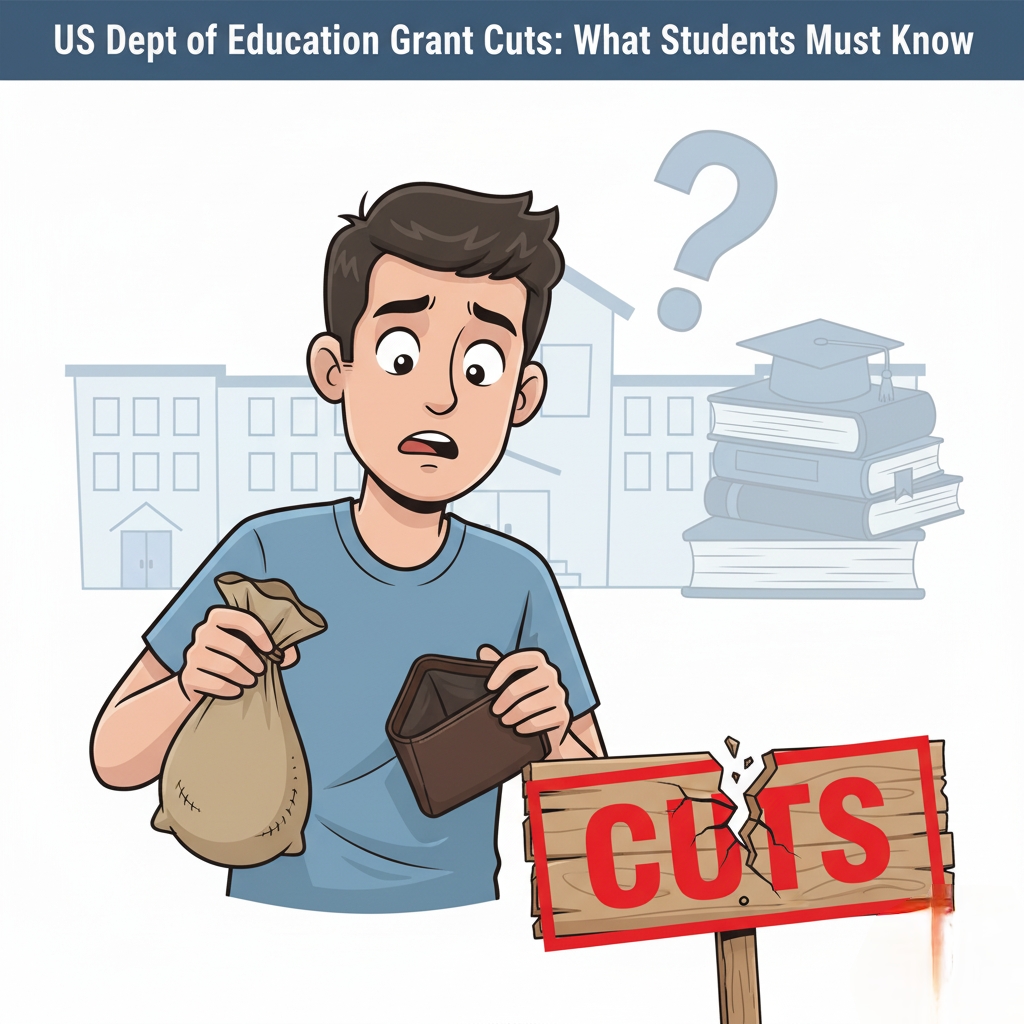
Education has always been considered a gateway to opportunity, especially for students who don’t want to sacrifice their dreams, no matter how tough the financial situation. Government grants, that is, the support that helped students continue their education—without interest, without stress. Funding cuts don’t just reduce numbers on paper — they affect real students, real dreams, and real futures…. It means:
- Less financial help
- Fewer scholarship seats
- Higher out-of-pocket costs
- And most importantly—students’ futures are directly affected.
This situation isn’t just about money. It’s about the dreams and hard work of young people who want to create a better future for themselves and their families.
Good news? Even in tough times, solutions exist. Alternative scholarship programs, state funding, community support, part-time education opportunities—students still have options.
But in this article, we’ll explain honestly, clearly, and from a student’s perspective the real impact of the US Dept of Education grant cuts, what and how they will affect students, and most importantly, how you can deal with this situation. Because education isn’t just a system, it’s a commitment to making your dreams a reality.
Let’s start with clarity.
What Are Education Grants? (Simple Explanation)
You’ve likely heard a lot in the news these days—US Dept of Education grant cuts—and naturally, everyone has the same question: What is a grant, and what will be the impact of these cuts?
In simple terms—education grants are free financial assistance that students receive to continue their education. Yes—they aren’t loans, so they don’t have to be repaid.
These grants are given to students who:
- Are struggling financially
- Are academically serious
- And want to secure a future through education
Their primary purpose is to ensure that money never becomes a barrier to education. Whether it’s books, tuition fees, hostels, meals, or laptops—grants help manage.
But when US Dept of Education grant cuts appear in the news, it means that this support for future students could be reduced—and naturally, tensions increase, especially for those who rely entirely on grants.
In short:
- Education grants = free educational support (no repayment)
- Support the academic dreams of deserving students
- A lifeline for students from lower-income backgrounds
- Concern in the current scenario = the direct impact of US Department of Education grant cuts on student funding
That is – grants are a hope, and cuts mean putting dreams at risk.
Current Update: Why US Dept of Education Grant Cuts are being
Honestly, education news seems a bit heavy, but this topic can’t be ignored. Recently, talk of US Dept of Education grant cuts has been circulating everywhere—and their impact is directly affecting students.
So, in simple terms, the situation is this:
The U.S. government has decided to reduce or tighten certain education grants. These are the grants that thousands of students rely on to cover their college fees, books, housing, and daily study expenses. So yes, this feels scary for many students.
But why? Why is all this happening? The government is saying that the budget is being adjusted, and funds are being shifted to priority programs. Meaning, a bit of financial reshuffle—which is having a negative impact on student funding.
What will the impact be?
- Financial support will be harder to find.
- Low-income families will struggle more.
- Pressure on college affordability.
- Students will have to find alternative funding.
Basically, the direct implication of US Dept of Education grant cuts is that financial planning will become even more important than studies. Dreams will remain the same, just the path may be a little tougher.
But don’t panic! Funding hasn’t stopped; categories have just shrunk. Smart students will make smart decisions—scholarships, part-time options, private funding—everything is available.
This situation is like an alarm—secure your backup plan.
One thing is clear: education has now become a game of competition as well as financial strategy. Those who are aware are ahead.
Why Are These Grant Cuts Happening?
Look, this question must be on everyone’s mind— Why are education grants suddenly being cut? So, let’s explain it in simple terms:
The US economy is currently going through a sensitive phase—budget pressure, inflation, and controlling government spending… All these factors combined are creating a tough situation. Therefore, the U.S. government is tightening funding in certain sectors—including education grants.
In a way, it’s like a financial reset.
According to the government:
- Funds are being shifted to priority areas.
- To maintain national budget balance.
- To control fraud prevention and grant misuse.
- To improve efficiency (in technical terms: more accountability in spending).
But what does this mean for students? It seems a bit unfair, because education is what builds the future. When US Dept of Education grants are cut, the pressure falls directly on students and families—especially those who truly depend on aid.
Put it down in one line: The country’s budget was tightening… and students were the first to feel the impact.
Still, the good news is this: There’s no need to panic—this isn’t a permanent shutdown, just an adjustment phase. Policies change constantly, and education funding space never completely dries up.
What could happen in the future?
- Grants could be streamlined.
- New scholarships could be launched.
- More merit-based and need-based hybrid systems could emerge.
So yes, these cuts are frustrating, but they don’t mean the doors are closed—only the entry rules are changing.
Smart students will now move on to Plan B.
Who is affected the most?
Who is being most impacted? Simple—those students who genuinely depend on financial aid.
These grant cuts are not normal news… for some families, it is a reality shock. Specifically:
Low-income students—for whom the grant was their ticket to higher education.
First-gen college students—those who are the first in their families to build dreams by going to college.
Minority and underrepresented communities—for whom this support creates fair opportunities.
Students from rural or underserved areas—where there is already limited awareness and guidance.
Those planning to study abroad or in top US universities—because competition has become even tighter.
Research-based fields (STEM, social impact programs, education majors)—where funding is directly linked to a project’s future.
I know… sometimes it seems that those who really need it are the ones who are most affected. This is a harsh reality—especially when the topic is US Dept of Education grant cuts.
Let’s talk from the student’s POV?
- Dreams slow down
- Financial planning freezes
- Anxiety and doubt creep in—Will I be able to afford it?
- The future roadmap becomes doubtful
But listen… This doesn’t mean the dream is over. It just means the game has gotten harder—and now a smart strategy is needed.
The student who is adaptable, proactive, and finds alternative resources will win. And that’s exactly what we’re creating this entire guide for—so that you’ll be among those who don’t give up.
How These Grant Cuts Affect Students
Let’s be real—when US Dept of Education grant cuts happen, the impact isn’t just on the budget sheet… it’s on the real lives of real students.
The effect is felt layer by layer—as if someone is silently pulling the rug from beneath the future.
Financial Stress Goes Up. The money previously covered by the grant now has to be managed by the student— Fees, books, accommodations, everything starts to feel overwhelming. How will I save? Will I have to take out a loan?-type thoughts flood in.
Mental Pressure & Anxiety: Even the brightest students break down when funding becomes uncertain. The cloudiness of the future shakes confidence.
Dropout Risk Some students might even think —
>If I can’t afford it, maybe it’s best to drop a year…
And trust me, this decision is tough both emotionally and academically.
Delayed Education Plans Dream degrees, top universities, research plans — Everything goes on pause. Sometimes opportunities don’t come back… that hurts.
More Work Hours = Less Study Time Many end up taking part-time jobs to fill the gap — but then the study-work balance becomes a struggle. Grades, focus, energy… pressure on everything.
Reduced Exposure Is the dream of studying abroad on hold? International exposure, networking, internships — everything feels delayed.
But listen…. Every setback is also a filter—students who adapt emerge stronger.
This situation isn’t the end. It’s a plot twist—and plot twists only happen to those whose life script is written for success.
So breathe, plan smart, explore alternatives (scholarships, aid programs, part-time grants)—
And remember: > Dreams can be delayed… not cancelled.
Impact on Colleges & Universities
When US Dept of Education grant cuts occur, the impact isn’t just on students— Schools and universities also feel major pressure.
Their systems suddenly feel unstable—as if the foundation of a building has been slightly shaken.
Reduced Funding = Resource Crunch Libraries, lab equipment, counseling services, research support— Things that used to be funded by grants are the first to be affected.
Make this upgrade next semester… It’s slowly postponed, sometimes stalled.
Less Staff or Hiring Freeze Faculty hiring slows, assistantships are reduced, and sometimes even leads to staff reductions.
Which means students receive less personal support.
Lower Research Output Universities are proud of their research, right? Grant cuts = less funded research = impact on innovation.
Research projects on hold, lab hours cut, collaborations slow.
Impact on Enrollment: When students don’t receive support, admissions can drop. International students especially think —
>Funding is uncertain… I’ll choose the safe option.
This means universities lose brilliant minds who could become future scholars.
Reputation & Ranking Concerns No funding → No research → No innovation. Long-term rankings and reputation can also be affected.
And obviously, universities want their brand to remain strong.
Administrative Pressure: University officials have to handle parents, students, and staff. Meetings, planning, budget balancing — stress skyrockets.
But good thing? Most universities don’t just sit quietly
- alternative funding search is underway
- emergency student support has been launched
- alumni donors have been activated
Because end of the day — our goal is simple:
>No student should lose education because funds got tight.
Education system is getting shaken… but the system does not give-up.
US Dept of Education grant cuts
What Students Can Do Now
When grant cuts happen, I panic, I get it. Feels like — What will happen to the future?!
But the truth is this: Smart planning = still safe & sorted
This situation is tough, but not hopeless at all. If you become proactive now, no US Dept of Education grant cuts can stop you.
Here’s what you can do right now
Stay Updated on Official Announcements
Don’t trust random WhatsApp forwards and rumors. Always follow:
- U.S. Dept of Education website
- University financial aid office updates
- Official emails & newsletters
Correct information = Correct decisions
Talk to Your University’s Financial Aid Office
They’re literally there to help you. Ask about:
- Alternative aid programs
- emergency support funds
- Work-study options
- Fee deferment plans
Never assume no help will be found Ask → Apply → Secure
Apply for Alternative Scholarships
Grant cuts mean education ends? Nope – the scholarship world is very big.
Try:
- University scholarships
- Private education foundations
- Country-specific scholarships
- Need-based & merit-based programs
You just need right opportunity + right effort.
Consider Part-Time Work / Work-Study
If on-campus jobs are available — go for it.
Benefits?
- financial support
- resume experience
- Networking & confidence
Win-win.
Track Your Budget & Prioritize Essentials
Avoid impulse spending — MacBook will be available later too
- Make a student-budget plan:
- Rent / Food / Transport (priority)
- Study essentials (books, tools)
- Extra spending (with limit)
This phase is smart spending teaching mode.
Reach Out — Don’t Struggle Alone
Sharing with someone provides clarity. Talk to:
- Parents/siblings
- university mentors
- Student support communities
- international student groups
Asking help ≠ weakness Its strategy
Keep Backup Plan Ready
Having a plan for worst-case = peace of mind.
Plan B ideas:
- Fully funded graduate scholarships abroad
- Transfer to another university
- Remote study / hybrid options
Smart student = prepared student
Bottom Line Yes, US Dept of Education grant cuts create stress. But if you stay calm, informed, and proactive, No financial wave will derail you.
Your dream isn’t coming to a hard stop— it’s just taking a little smart detour.
Government & Community Support in the U.S.
(Responsibility of Government and Society)
When it comes to students’ futures, the role of parents and teachers alone is not enough—the government and community are equally responsible.
A good education environment is created when:
- Schools have proper resources
- Teachers receive regular training
- Students have a safe and supportive space
What is the government’s role?
- Providing modern classrooms and digital learning tools
- Running scholarship and support programs for students
- Making rules to reduce study pressure
- Making mental health support and counselors available
If the government enacts strong policies, every student has an equal opportunity—whether they live in a metro city or a small town.
What is the community’s role?Society shouldn’t just be onlookers—it should be supportive.
- Taking parent-teacher meetings seriously
- Creating local libraries and study clubs
- Encouraging students, not comparing them
- Starting free coaching helplines and mentorship programs
Think… if we all work together to create a positive study culture, where learning is viewed with growth and curiosity, not competition, students will naturally become smarter and more confident.
The future will only be bright when everyone shares responsibility.
Future Predictions: What’s Next for Education Funding?
What’s coming next? The biggest question on the minds of students and parents is—are these US Dept of Education grant cuts permanent, or will the situation improve?
Could Grants Increase Again?
Yes, that’s definitely a possibility. The government has openly stated that US Dept of Education grant cuts are a temporary financial adjustment, not a permanent policy. If the economy stabilizes and student support demand increases significantly, grants may increase again. In short—hopefully, there’s no need to panic.
Expected Policy Discussions
Numerous meetings are expected in the coming months, including:
- Financial aid formulas will be reviewed
- Low-income student support will be debated
- Solutions to improve college affordability will be discussed
Lawmakers and education boards are also considering direct student feedback—meaning student voices matter more.
What Experts Believe
Experts say the future will be mixed. Some say education funding will rebound strongly after temporary cuts, as student support is essential to the long-term economy. Some analysts are cautious—they believe improvements will come, but slowly and step-by-step.
Overall vibe?
> Cuts are in place today, but tomorrow the funding structure could be smarter and more student-friendly.
FAQs – About US Dept of Education grant cuts
1. Are the US Dept of Education Grant Cuts permanent?
No, there is no final confirmation yet. These cuts appear to be temporary financial adjustments—the situation may improve in the future if economic conditions improve and policy discussions move in a positive direction.
2. Will low-income students lose their education support?
Direct support will not be completely discontinued. However, some grant options may be temporarily reduced, forcing students to explore alternative options such as scholarships, work-study, and state-level aid.
3. Can I still apply for grants?
Yes—applications are open. Cuts do not mean a closure. Be sure to apply to programs that are still available; competition may be slightly high, but opportunities exist.
4. What should students do right now?
Be proactive—search for scholarships, talk to financial aid counselors, use campus resources, and follow the latest updates. Today’s awareness can be an advantage tomorrow.
5. Is college still affordable after these grant cuts?
Yes, options are still available—you just need to do a little more planning and research. Colleges, states, private organizations, and community programs still provide student support. Smart choices = affordable education possible.
Conclusion: Stay Informed, Stay Strong
US Dept of Education grant cuts are definitely causing stress for students—especially those who depend on government funding. But the picture isn’t all negative.
Government policy discussions are ongoing, experts are hopeful, and alternative support sources are available. What seems uncertain today could transform into a better-structured system tomorrow—where funding is smarter, fairer, and student-focused.
Right now, the best move is simple:
- Stay informed
- Explore scholarships and state grants
- Seek support from financial advisors
- Utilize community resources
Education builds the future—and these cuts are just a phase, not a destination. Your goal is bigger—and your efforts are smarter, so success is guaranteed.
US Dept of Education grant cuts